Wanderers
On This Page
As I pondered how best to characterize the photographers I discuss in this section, I thought quite a bit about my choice of words. The term street photography might be one selection. Some group this genre under the more general rubric of documentary photography, which feels too broad and matter-of-fact. Certainly there is a degree of art in the kind of photography that I found myself trying to describe, but art photography is also too broad of a genre. At any rate, there is an element of art involved in any kind of photography beyond simple snapshots.
I eventually realized that the term wanderers best described the photographers who interested me the most. No matter where a photographer was—on the street, travelling from one place to another, or wherever—the common thread was the fact that the kind of photography I describe here was the result of the photographer happening upon a scene and, with a great sense of artistry, capturing an image of it.
This newer visual style grew into favor largely after World War II. Whether they found themselves on the street or elsewhere, many photographers grew more enchanted with a “snapshot aesthetic,” with everyday subjects as they appeared in available light. They used mostly 35mm cameras, reveled in the grit of higher-speed film grain, placed their subjects in harsher contrast, and intentionally used out-of-focus techniques to truncate their composition and to depict how something is seen instantaneously.[1] Although their work was the antithesis of careful and deliberate composition as directed by the photographer, composition was still a key element in their photography.
Laying the Groundwork
Several early practitioners helped lay the groundwork for what we might today call street photography.
Eugène Atget (1857-1927)
Many observers rightly see Eugène Atget as the father of street photography.[2] He used an old and unwieldly 18 x 24cm box camera that he refused to update. (Man Ray once offered him a Rolliflex, but he said that it worked faster than he could think.) Atget attempted to compete—unsuccessfully for the most part—with professionals who supplied photographs to artists in need of subject matter and to tourists. Instead, he concentrated on unspectacular everyday subjects on the periphery and in the corners of old Paris until he died. By the end, he had produced around 10,000 prints. In 1928, his friend and fellow photographer Berenice Abbott acquired much of his work and put it on exhibition two years later, thereby cementing his international recognition.[3]
My favorite photograph of Atget’s is his image of an organ grinder that he took around 1898 or 1899.
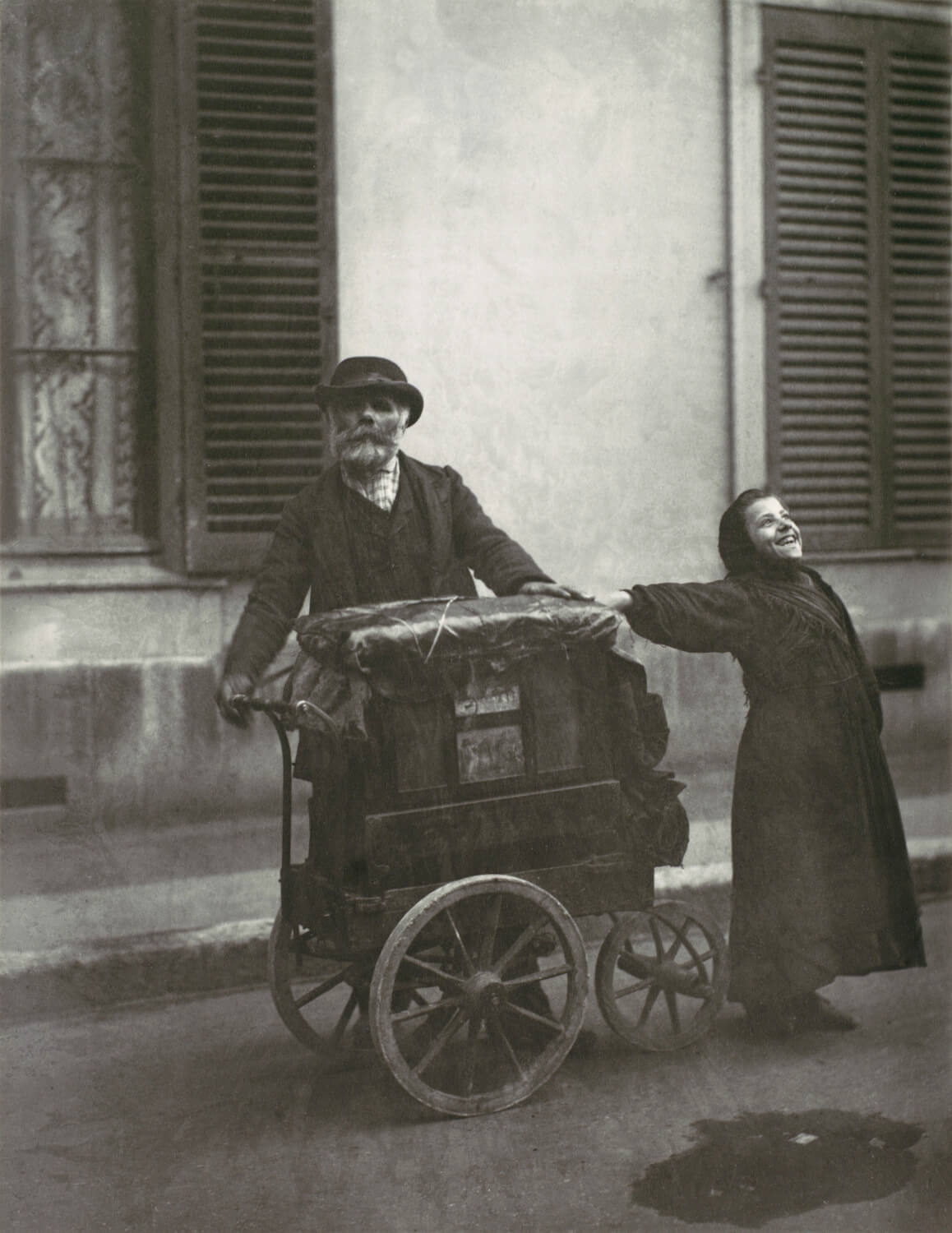
Around the supposed merriment on display by the girl on the right, there is an overall sense of coldness and creepiness that surrounds her and the man next to her. It is very obviously a posed scene and not a spontaneous moment in time that a photographer with more nimble gear might have captured.
I must confess that much of Atget’s work does not move me. His significance lies more in the way he introduced other photographers to the compelling subject matter one finds in everyday street scenes.
More information:
André Kertész (1894-1985)
During the very earliest days of street photography, Paris was undoubtedly the center of action. Perhaps sensing this, the Hungarian-born André Kertész moved to Paris in 1925 to begin a career as a freelance photographer. Speaking little French, he wandered the streets with his 35mm Leica camera and developed an observant and intimate approach to photography. Kertész work imparts what art historian Mary Warner Marien described as the “Surrealist feeling for the magic of coincidence and presence of the mysterious in everyday life.” He took joy “in seizing a fleeting yet resonant visual moment.” In 1936, he immigrated to New York and began an association with Vogue, Harper’s Bazaar, and other publications. Well connected, Kertész influenced the work of many other photographers.[4]
One of my Kertész photographs is one he took on a rainy day in 1929.

Perched above the street and using what in all likelihood was a telephoto lens, Kertész captures the mood of the wet day with the glare of light reflected off the wet surfaces of the street and sidewalk. The repetition of the streetlamps guides the eye to an out-of-focus man in motion with an umbrella.
More information:
Brassaï (Gyula Halász, 1899-1984)
Strongly influenced by both Eugène Atget and André Kertész, Brassaï arrived in Paris in 1924. In ways similar to the experience of Kertész, his work shows evidence of his contact with Paris Surrealists. In particular, Brassaï’s nighttime photography of Paris, which he collected together in his 1931 book Paris de Nuit, shows that Surrealism influenced his work even after the movement’s peak.[5]
One prime example of Brassaï’s work is his “Lovers in a Café on the Palace d’Italie” (1932).

With the kind of human candor that I have grown to love capturing in my own photographs, we see a couple engaged in conversation and canoodling. The key element to this composition is Brassaï’s use of the corner mirrors to reflect the faces of both individuals. The mirrors allow us to see them at several different angles.
More information:
Humanism
A broad movement encompassing a wide range of approaches, humanism concerned itself above all else with the commonality, universality, and dignity of everyday human life. It came to prominence after World War II especially among French photographers. Distinct from the work of photojournalists who covered newsworthy events, humanists were more interested in faithfully documenting the manners, customs, and overall experience of humanity. The underclass was of particular interest to several humanist photographers.[6]
Henri Cartier-Bresson (1908-2004)
Undoubtedly the dean of humanist photographers, Henri Cartier-Bresson is a giant in the history of photography. More in a theoretical than in a practical sense, Surrealism had the greatest influence on him in terms of its focus on “spontaneous expression,” in Cartier-Bresson’s own words. The instantaneous composition of a scene—the “decisive moment”—was his forte.[7]
For his early work, he used a variety of cameras including a box camera with 9 x 12 plates, a Rolleiflex, and a Krauss. Things changed dramatically for Cartier-Bresson in 1932, when he acquired a highly nimble, nearly silent, and unobtrusive 35mm Leica with 50mm lens. He was rarely without it thereafter. “It became the extension of my eye, and I have never been separated from it,” he once said.[8]


Henri Cartier-Bresson showed me what one could do with nothing more sophisticated than a small, simple, and inconspicuous camera. By today’s standards, his camera gear was hopelessly crude. Yet it was all he needed to capture “the decisive moment” with masterful skill. And for him, that moment often did not occur during the excitement of a high-profile event but rather during the far more mundane moments of everyday life.
Henri Cartier-Bresson’s work is a reminder to focus not on ogling camera gear but instead on getting out there, using what I already have, and seeking out the best photographs I can make.
More information:
Robert Doisneau (1912-1994)
Largely self-taught, Robert Doisneau first picked up a camera around the age of seventeen. Wandering through the streets of Paris, he found that photography was the ideal medium for recording everyday life as he encountered it. In 1934, he was hired by Renault as a commercial photographer. With the onset of World War II, he gave up his dreams of being a photojournalist, but he did not entirely give up photography during this period. After the war, he joined the staff of Vogue magazine and later turned freelance. But at bottom, his street photography and his sympathy for the common people was what made him famous.[9]

I first encountered Robert Doisneau’s work during my freshman year in college. On one page in my art history textbook was one example from a series Doisneau completed for Life magazine showing passers-by reacting to a painting of a nude in a Paris shop window. His ability to show those candid, unguarded moments still makes me smile.

Another of my favorites is a photograph Doisneau took at the Place de la Concorde in 1969.
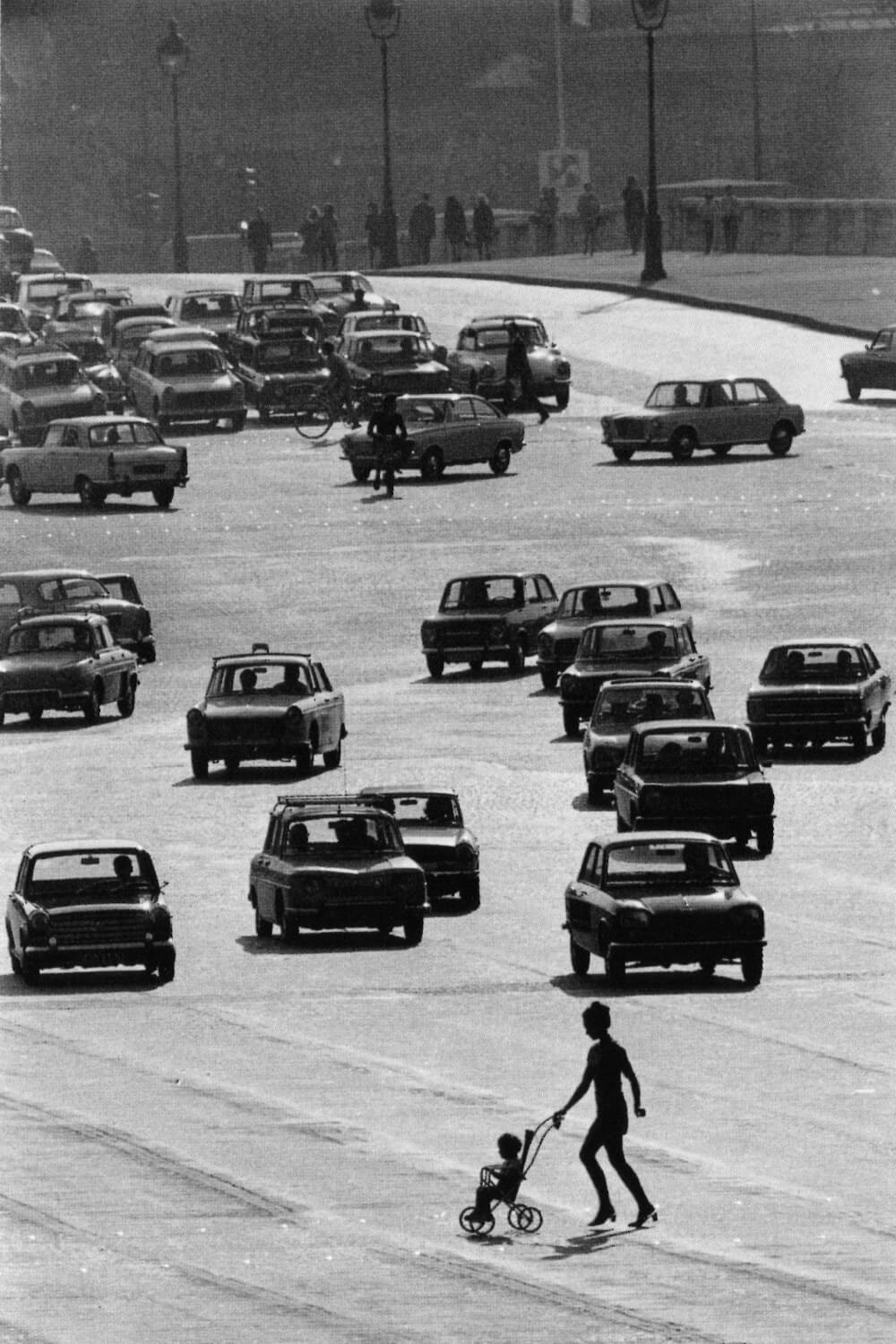
To those who may believe that street photography requires an aggressive in-your-face approach, Doisneau offers another way. When he was getting his start in photography in Paris and its suburbs, Doisneau maintained a certain degree of distance from his subjects, which were mostly children and adults. Doisneau himself said, “When it comes down to it, constraint’s no bad thing. My shyness censored me, and I took people only from a distance. As a result, there was space all around them, and this was something I tried to get back to...”[10] Rather than see it as an undesirable byproduct of his shyness, Doisneau made the surroundings in which his subjects existed part of his composition.
More information:
Willy Ronis (1910-2009)
Another French humanist photographer of the Parisian school, Willy Ronis focused his photographic eye on capturing “slices of ordinary life” mostly in Paris and the South of France between the 1930s and the 2000s. His commitment to social causes often led him to less glamorous yet still compelling subject matter. Although he rarely worked under commission, Ronis was a rather curious international traveler who engaged the exhibition and lecture circuit. Edward Steichen included his work among that of Brassaï, Cartier-Bresson, Doisneau, and Izis in the Five French Photographers exhibition in 1951 and in the Family of Man exhibition four years later.[11]
Willy Ronis was neither interested in formalism nor constrained by any theme. He instead found beauty in the everyday. “A good picture is geometry modeled by the heart,” he once said.[12]
One such example is a photograph he took in Paris in 1947.

Ronis himself commented extensively on this image:
That day, I was getting ready to take the metro at the Tuileries to go home. It was late morning, on the Place Vendôme. Suddenly, I don’t know why, I lowered my head and noticed a puddle of water. I leaned down again and, looking at it very carefully, I saw that a treasure was hidden in this puddle, the Vendôme column was reflected in it. Of course, I immediately wanted to take a photo; it was a small miracle, this reflection. And immediately, a young woman stepped over this puddle. Damn, I wasn’t ready. I missed it, even though I would have so much wanted to capture this gesture, this whole thing, with the puddle, the leg, and the reflection of the column. But when I raised my head, I realized that several women were passing by and all going in the same direction. It was the workshops of the Place Vendôme who were throwing away their little sewing projects for lunch, they were probably going to meet up and relax in a bistro on the Rue Saint-Honoré. I looked at my watch, yes, it was noon, that was it. So, I waited. Three women, one after the other, followed the same path and stepped over the puddle. I took three photos. They didn’t notice me since it was the puddle I was aiming for. I could have, at a pinch, passed for a maniac or someone very strange, but, at least, I was able to achieve the effect I wanted. This photo is the most beautiful of the three. It is strange, sensual, with the beautiful design of the pump and the particular atmosphere of that day, when, I remember, it had not stopped raining.[13]
Like several other Parisian street photographers, Ronis was also active documenting the city at night.

More information:
- Willy Ronis’ Most Famous Images, Told by Himself.
- Five Favorite Photos - Willy Ronis.
- Peter Fetterman Gallery profile.
- The Photographer Who Saw Paris With His Heart in His Eyes.
- Willy Ronis’s Les Amoureux de la Bastille (The Lovers of the Bastille).
- MoMA profile.
- Art Institute of Chicago profile.
- Wikipedia.
Louis Stettner (1922-2016)
Bridging French humanism and the so-called New York school of photography, Louis Stettner combined the sensitivities of photographers like Robert Doisneau and Willy Ronis with an American aesthetic. At an early age, he made frequent trips into Manhattan, routinely visited the Metropolitan Museum of Art, and established his love for art. In 1939, he attended a Photo League class taught by Max Drucker. Stettner later studied as a military student engineer at Princeton University and worked as a combat photographer from 1944 until the end of the war. He served in New Guinea, the Philippines, and Japan, and he witnessed the aftermath of the atomic bombing of Hiroshima. The fight against fascism left him with a lasting faith in humanity. Having voraciously consumed Plato’s writings, it was during his wartime military service that Stettner developed into a literary photographer. He kept a worn copy of Walt Whitman’s Leaves of Grass that went everywhere with him in his camera bag.[14]
In 1946, he returned to New York, rejoined the Photo League, and formed a connection with Paul Strand. But Stettner did not remain in America for long. Later that year, he visited Paris, and in 1947 he moved there. For the next two years, he studied photography and cinema at the Institut des hautes études cinématographiques (IDHEC), where he earned a bachelor’s degree in 1949. Over the following two decades, he traveled frequently between Paris and New York.[15]
Stettner was a well-connected photographer. In New York, he got to know Weegee, the flamboyant photographer of New York’s raw side. In 1948 upon the request of the Photo League in New York, he helped organize the high-profile French Photographers Today exhibition which included the work of Doisneau, Brassaï, and Ronis, who were all eager to have their work displayed in America and who met with Stettner personally. He found particularly strong mentorship with Brassaï, with whom Stettner would regularly encounter. In fact, Brassaï wrote an introduction to Stettner’s 1949 portfolio entitled 10 Photographs by Louis Stettner. In 1951, his work was included in the Subjektive Fotografie exhibition in Germany. A few years later in Paris, Stettner reconnected with Paul Strand, whose Photo League had been blacklisted and ultimately banned in America during the McCarthy years.[16]
Whenever he was back in New York, Stettner indulged in photographing what he regarded as the beauty of urban spaces, and he empathized with their inhabitants.[17]

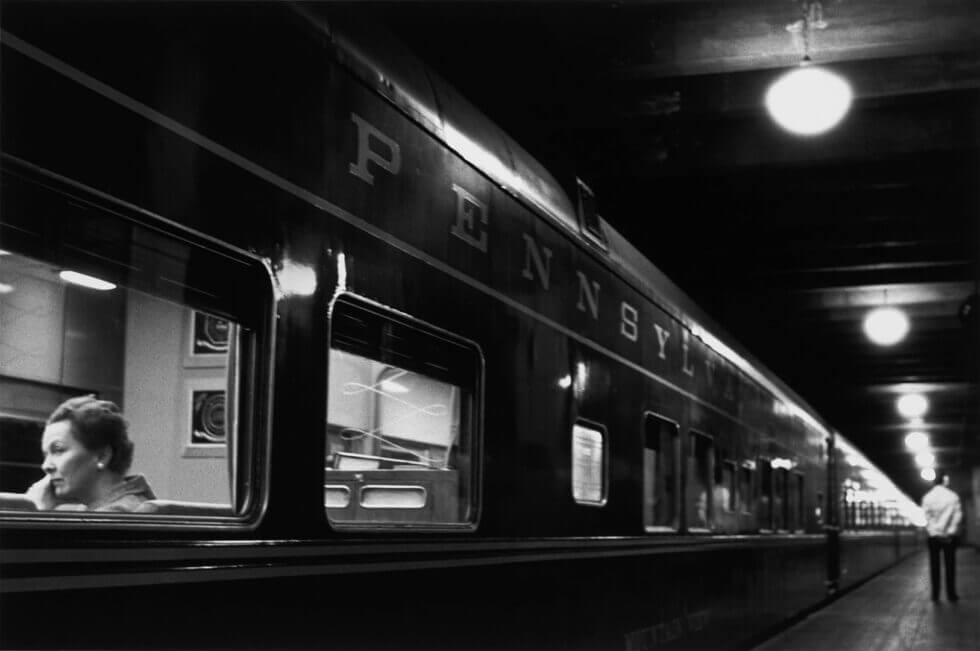

A lifelong Marxist with outspoken political and social beliefs, Stettner was also unabashed about sharing his viewpoints about photography. Yet he remained a humanist by nature, and he took care to depict workers as individuals without inextricably connecting them to oppressive workplaces. As a longtime contributor to Camera 35 magazine, he used his column as a platform to share his strong opinions about all manner of topics in photography.[18]
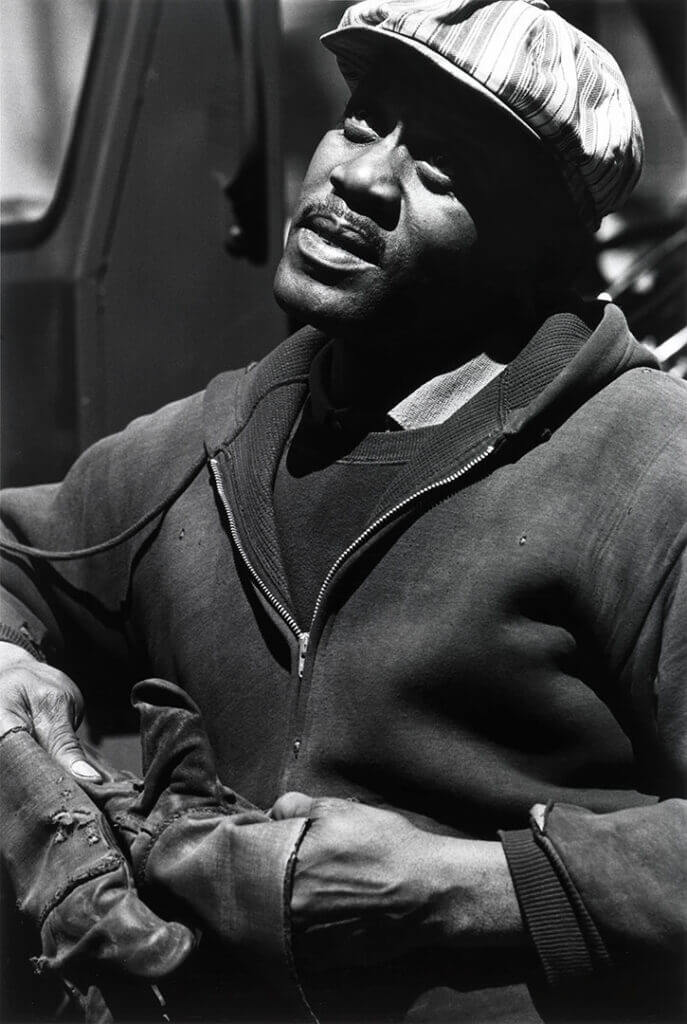
Sadly, Louis Stettner does not often appear within the canon of postwar street photographers. That is a great loss to those who are ignorant of his first-rate work.
More information:
Frank Horvat (1928-2020)
Another photographer whose work tends to fly under the radar is Frank Horvat.
Born in Italy to Jewish parents, the late 1930s and the 1940s proved to be a tumultuous period for him and his family. In 1939, he and his family fled to Switzerland. But Horvat eventually found his way to photography. At the age of seventeen, he traded in his stamp collection for a 35mm Retinamat camera because, as Horvat himself wrote, “a friend told me that it helped getting acquainted with girls. In fact it didn’t, but it helped me to learn about composition.” In his twenties, Horvat’s career took off. In 1951, he traveled to Paris and met Robert Capa and Henri Cartier-Bresson, who advised him to buy a Leica camera and who gave him suggestions that would prove influential to his later work. The next year, Horvat traveled to India under his own initiative and without a return ticket. The photographs he took on that journey were published by several magazines and gained him enough notoriety that Edward Steichen selected some of his work for his Family of Man exhibition. Horvat joined Magnum Photos in 1959, but his membership with that collective lasted only three years. Interested in experimentation, he worked in numerous photographic genres including landscape photography, fashion, and portraiture.[19]


Horvat clearly had a great deal of skill with capturing a sense of candid expressiveness in his subjects. I especially appreciate his frequent use of telephoto lenses to compress near and far.
More information:
Elliott Erwitt (1928-2023)
Another photographer born in Europe to Jewish parents who fled persecution is Elliott Erwitt. Rather than remain in Europe, Erwitt and his family migrated to America in 1939. He studied photography in Los Angeles, moved to New York in 1948, and connected with Edward Steichen, who selected one of Erwitt’s photographs for his Family of Man exhibition. He also became acquainted with Robert Capa, who invited him to join Magnum Photos after Erwitt finished his service as a photographer’s assistant in the U.S. Army in 1953.[20]

In spite of his high-profile career, Erwitt reminds me that good photography doesn’t always have to be serious photography. Along with a strong sense of candidness, Elliott Erwitt’s work has a playfulness that reminds me to have my camera ready for capturing fun or humorous moments in life.

More information:
Raw
Distinct from the humanist school of photography yet not completely separate from it were another group of post-World War II photographers in America whose work conveyed a rawer aesthetic. They offered a critical view of America or simply saw it in a grittier way.
Robert Frank (1924-2019)
Foremost among this group was Robert Frank. Influenced himself by the documentary photography of Walker Evans, Frank’s work in turn inspired many others to rove around with a camera. In 1955, he began the first of his many road trips. The photography that came out of them unraveled what art historian Mary Warner Marien called “the certitude of documentary photography” by FSA photographers and the picture press. Seeing an ailing culture, Frank produced a series of images that he published in his groundbreaking book The Americans, which was first published in France in 1958 because no American publishers would touch it at first (the book did appear in the U.S. the next year). Frank’s gritty, tilted, blurred, and unpremeditated 35mm film photography often conveys a sense of profound alienation and unease.[21]


The loner in me can relate with something that Frank said in 1962. He commented that “photography is a solitary journey. That is the only course open to the creative photographer. There is no compromise: only a few photographers accept this fact.” True to form, Frank ultimately left the United States for the relative isolation of Nova Scotia.[22]
More information:
Louis Faurer (1916-2001)
A friend of Robert Frank, Louis Faurer worked as a commercial fashion photographer and roamed the streets of New York in his free time. Far quieter than contemporaries who enjoyed broader recognition, Faurer nonetheless gained respect from Edward Steichen, who included Faurer’s work in his Family of Man exhibition.[23]


More information:
Garry Winogrand (1928-1984)
Perhaps a diametric opposite to Faurer’s work and overall approach is Garry Winogrand. With one commentator describing him as the father of “machinegun photography,” an approach that is popular among more aggressive street photographers, Winogrand had a blunt style and a caustic view of human nature. He started using a camera around the age of twenty but didn’t begin to develop a serious photographic practice until the early 1960s. Winogrand was perhaps the most existential photographer of his generation, and he was keenly sensitive to the authenticity of the fleeting moment. The very act of shooting a camera was key to his approach. He photographed incessantly with keeper images emerging from a vast number of discards.[24]


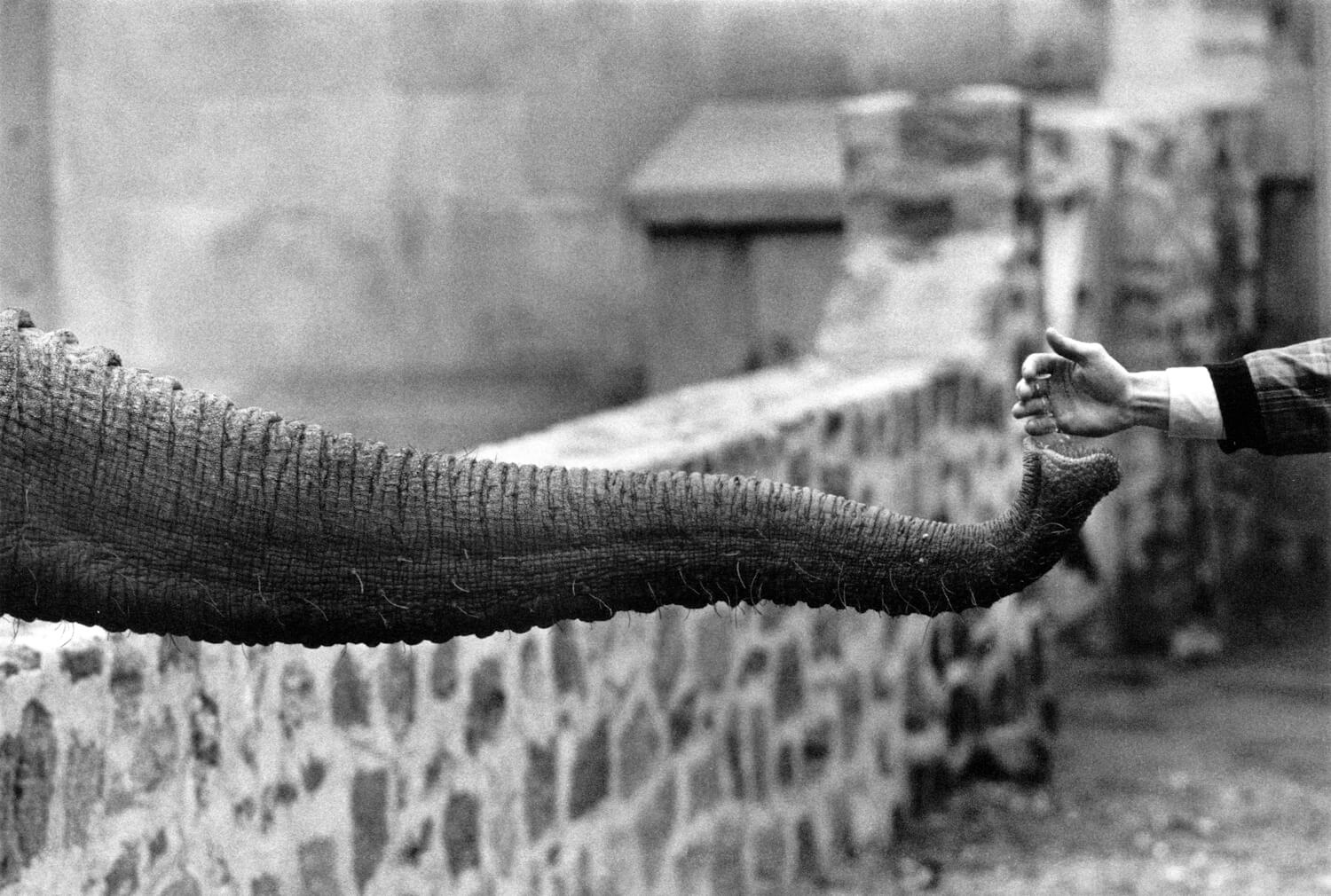

I find myself simultaneously repelled by Winogrand’s approach yet forced to consider its product. Although I can’t say that I seek to emulate his style, I am nonetheless compelled to grapple with his work. Is my interest in it one of a voyeur?
More information:
Lee Friedlander (1934- )
Influenced by Robert Frank, Weegee, and André Kertész, Lee Friedlander centered his work around personal observation. Like his friend Garry Winogrand, he was fascinated by how the world looked like when it was photographed. Distinct from Winogrand, however, Friedlander often placed himself or his shadow in his composition to remind the viewer of the photographer’s role in making the picture. Friedlander often placed photographs together into groups, thereby suggesting a theme. Meaning and discovery, in other words, came out of groups of images in a form of question and response, an approach that is often familiar to painters but rare among photographers.[25]


More information:
Pioneers of Color
Although they did not completely do away with black and white photography, a cohort of mid-twentieth century photographers challenged prevailing notions that high-art photography could only be done in monochrome. In contrast with the edgier work by Frank, Winogrand, and Friedlander, these photographers used color to add an abstract and painterly quality to their photography. They often achieved this effect by transforming an apparent limitation into an asset: the slow speed of color film in the 1950s and 60s. Rather than attempt razer-sharp images, a number of photographers used soft focus and blur as an intentional element in their work.
Ernst Haas (1921-1986)
Raised in Vienna by parents who played an active role in their son’s artistic development, Ernst Haas initially had no interest in photography. Yet upon his father’s death in 1940, he began making prints of old family photographs, and his interest germinated and grew. Later in life, he was still unsure about his desire to make a career out of photography. Haas eventually realized that he could succeed professionally while using the medium as a vehicle for expressing his ideas. In 1946, he traded a block of margarine for his first camera, a Rolleiflex. He presented his first exhibition in 1947. That same year, he and fellow photographer Inge Morath documented prisoners of war disembarking at a train station. Many of their photos were published in Heute and Life. That powerful series of images drew the attention of Robert Capa, who promptly invited him to join Magnum Photos. At the same time, Haas received but ultimately turned down an offer to join Life as a staff photographer out of reluctance to be hemmed in by what he saw as the publication’s restrictive scope. His Magnum connections facilitated his move to New York in May 1950. He lived there the rest of his life.[26]
Over the course of his career, Ernst Haas produced a vast catalog of color photography. He explored the possibilities of a medium that some may have seen as limited in capability. He used the slow speed of the color film of his day to his advantage by blurring and abstracting his subject matter.
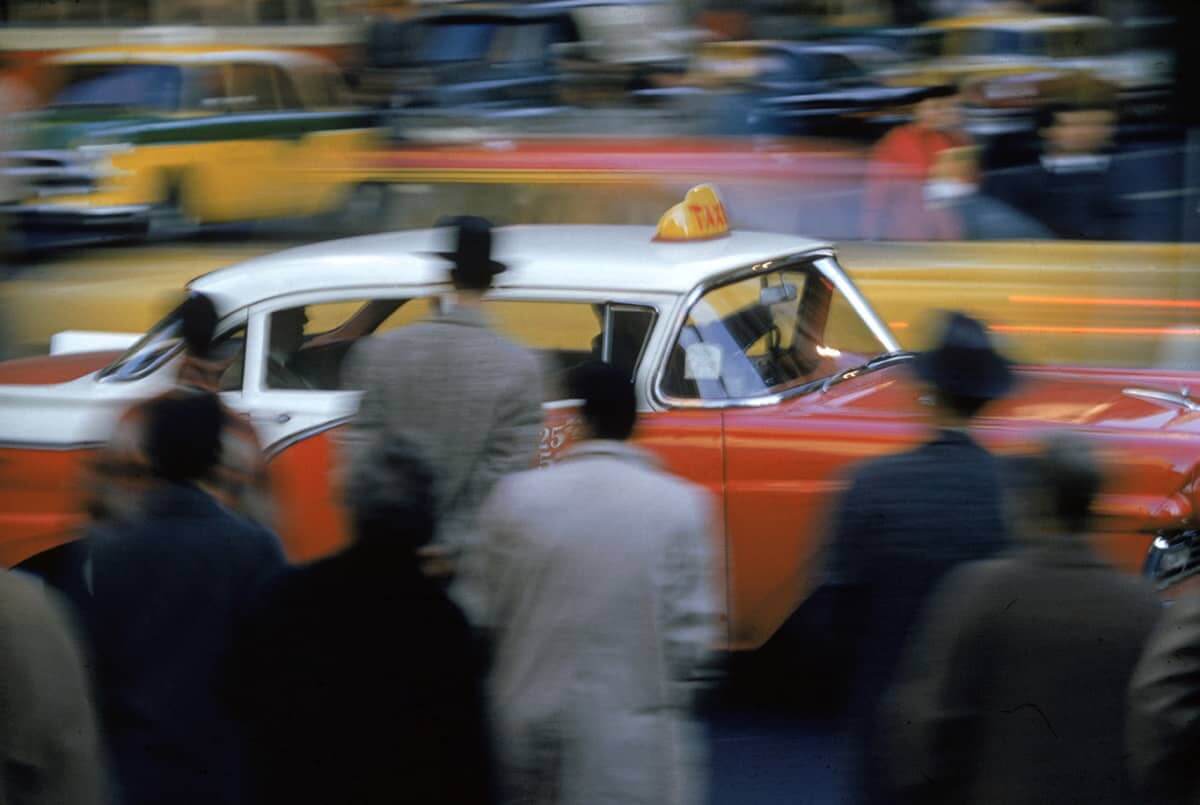


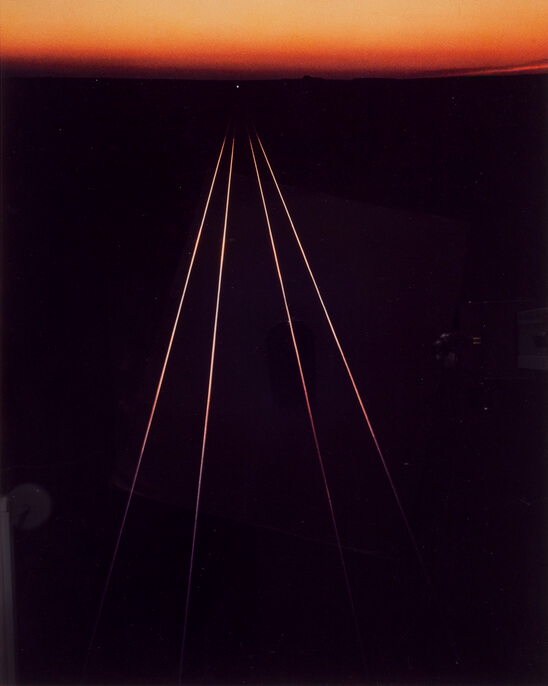

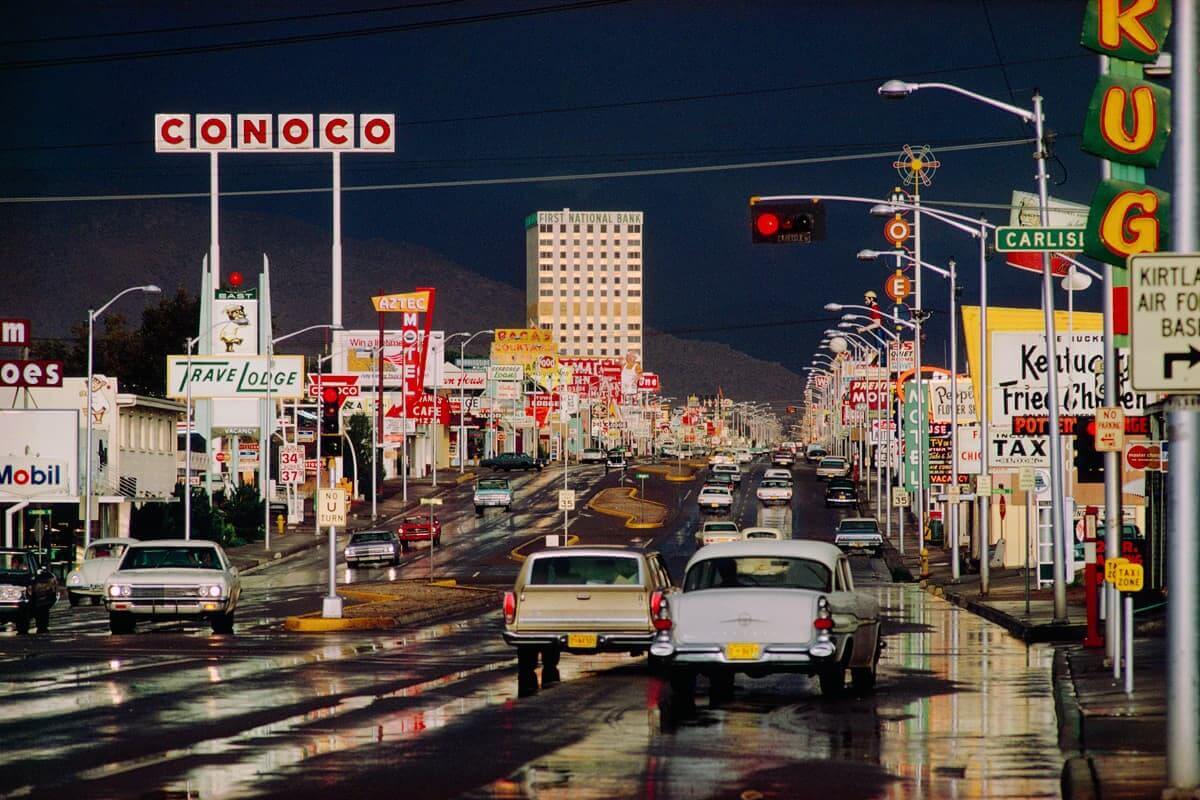
It was actually in an Ikea store display that I first saw Ernst Haas’s work. The image I encountered was one he captured on Route 66 in Albuquerque not long after a rainstorm passed. With the sun close to the horizon and dark clouds in the distance, his pioneering use of color film, which many in the high art world frowned upon as garish, and his use of a telephoto lens makes the cluster of activity on that highway pop. The sheen of fresh rainwater on the ground only adds to the image’s power.
More information:
Saul Leiter (1923-2013)
Not terribly dissimilar to Ernst Haas’s color photography of New York in the 1950s and 60s, Saul Leiter work has a gentle subtlety of its own.
Defying his father’s expectation that he should become a rabbi, Leiter instead dropped out of theology school and relocated from his native Pittsburgh to New York at the age of 23. There, he developed an extensive network among many artists and photographers. In the 1960s, he began working with several fashion magazines and produced a rather unconventional series of photographs that departed from what was typical for those publications. On his own time, he used his camera and wandered the streets not far from where he lived.[27]
Leiter’s effective application of blur, his creative use of window reflections, and his way of shooting straight through foggy or dew-laden windows all produced a calm quality in his images. By means of these techniques coupled with his pioneering use of color film, Leiter achieved a distinctly impressionistic quality in his photographs. Perhaps this may not be surprising considering that he was also a painter. Leiter’s unconventional approach to composition, his use of perspective from high above, and his technique of photographing through narrow gaps have led me to experiment with different ways of rendering my own photographic subject matter. I also very much like his frequent use of telephoto lenses to compress foreground and background.
Some street photographers are fearless in the way they photograph people by means of an in-your-face approach. Not Saul Leiter. His approach was not at all confrontational or aggressive. It was instead peacefully candid, something I can completely relate with.


Leiter often used window or mirror reflections to achieve a layered look, something I often strive for in my own photography.
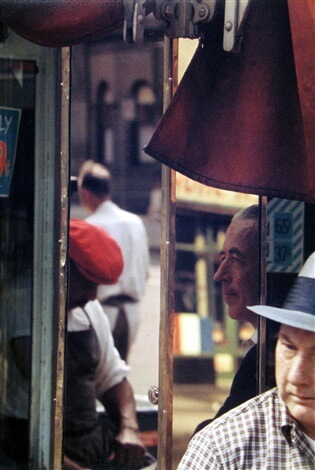
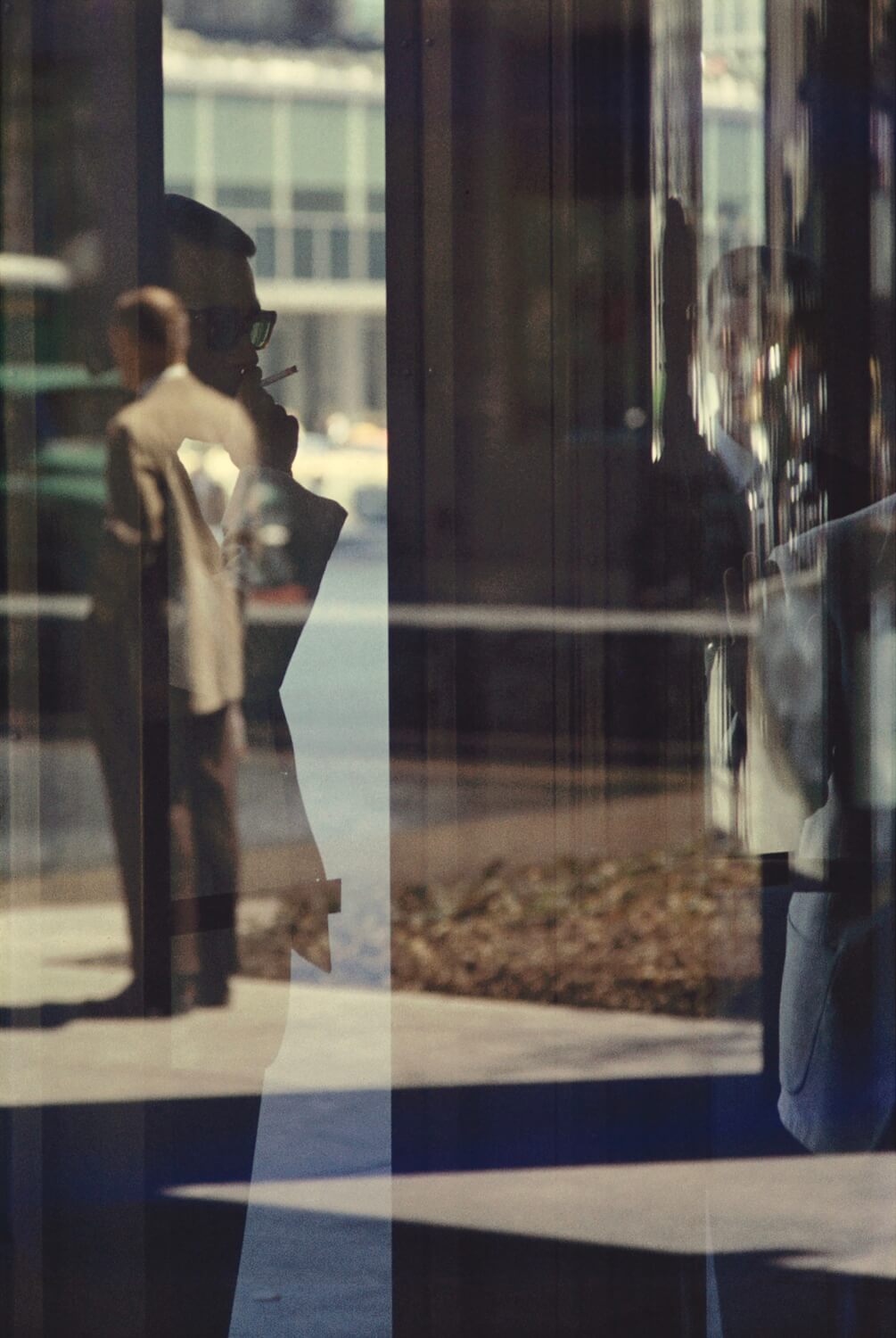


Leiter also frequently chose unconventional points of focus to render subjects with a more abstract quality. His work as an artistic painter surely influenced his photography.


Other than his photography, perhaps the best way to let Saul Leiter speak to us is through his own words. The following are a few quotes that appear in the 2020 book Forever Saul Leiter.
On his technique:
- One of the things photography has allowed me is to take pleasure in looking (2).
- I happen to believe in the beauty of simple things. I believe that the most uninteresting thing can be very interesting (29).
- Some of the good work that I did, I did right in my own neighborhood. The street is like a ballet. You never know what is going to happen (60).
- When I look at certain things, I find them attractive or interesting or beautiful, and I take pictures. Sometimes they’re good, sometimes they’re not so good... (64).
- When I did photography, I wasn’t thinking of painting. Photography is about finding things, and painting is different: It’s about making something (78).
- I have avoided profound explanations of what I do (103).
- I just take pictures of somebody’s window. That’s not such a great achievement (164).
- My photographs have not contributed to the improvement of mankind’s condition, but I’d like to think that the work I do gives others pleasure (171).
- I go out with my camera and I take pictures because I enjoy catching certain moments (185).
- I think that mysterious things happen in familiar places. We don’t always need to run to the other end of the world (196).
On life in general:
- To be an important person involves a great deal of effort. Quite often it’s not worth it (44).
- When you consider many of the things that people treat very seriously, you realize that they don’t deserve to be treated that seriously. And many of the things that people worry about are not really worth worrying about (74).
- I was hoping to be forgotten. I aspired to be unimportant (115).
- We live in a world full of expectations, and if you have the courage, you ignore the expectations. And you can look forward to trouble (116).
- I don’t see why you can’t be good at something without taking yourself so seriously (122).
- I’ve enjoyed having books. I’ve enjoyed looking at paintings. I’ve enjoyed having someone in my life that I care about who cares about me. I attached more importance to that than I did to the idea of success (155).
More information:
- My book report of Saul Leiter: The Centennial Retrospective.
- Saul Leiter Foundation.
- MoMA profile.
- ICP profile.
- Chicago Art Institute profile.
- National Gallery of Art profile.
- Howard Greenberg Gallery profile.
- Wikipedia.
- “Saul Leiter: New York in Color,” Aperture, Spring 2021.
- ‘There’s nothing quite like them’: Saul Leiter’s photos and paintings - in pictures.
- 10 Lessons We Can Learn from Street Photographer Saul Leiter.
- Five Favorite Photos - Saul Leiter.
- Saul Leiter - A Master of Color Photography.
- Saul Leiter (American, 1923-2013).
- Saul Leiter Catalog.
- Saul Leiter, Photographer Who Captured New York’s Palette, Dies at 89.
- Saul Leiter’s Ravishing Color Photographs of New York.
- The photographer who changed the way the world saw New York.
- Why Saul Leiter Kept His Colorful Street Photography Secret for Decades.
Fred Herzog (1930-2019)
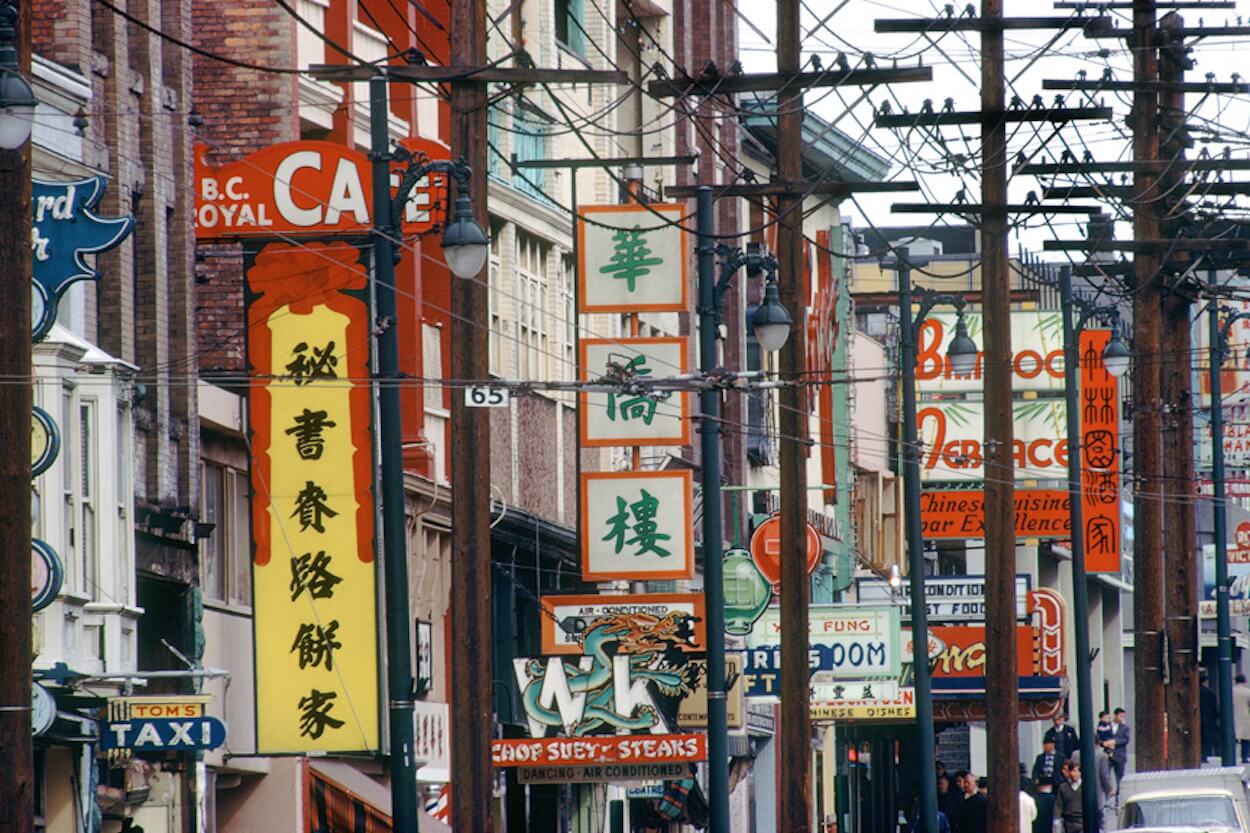
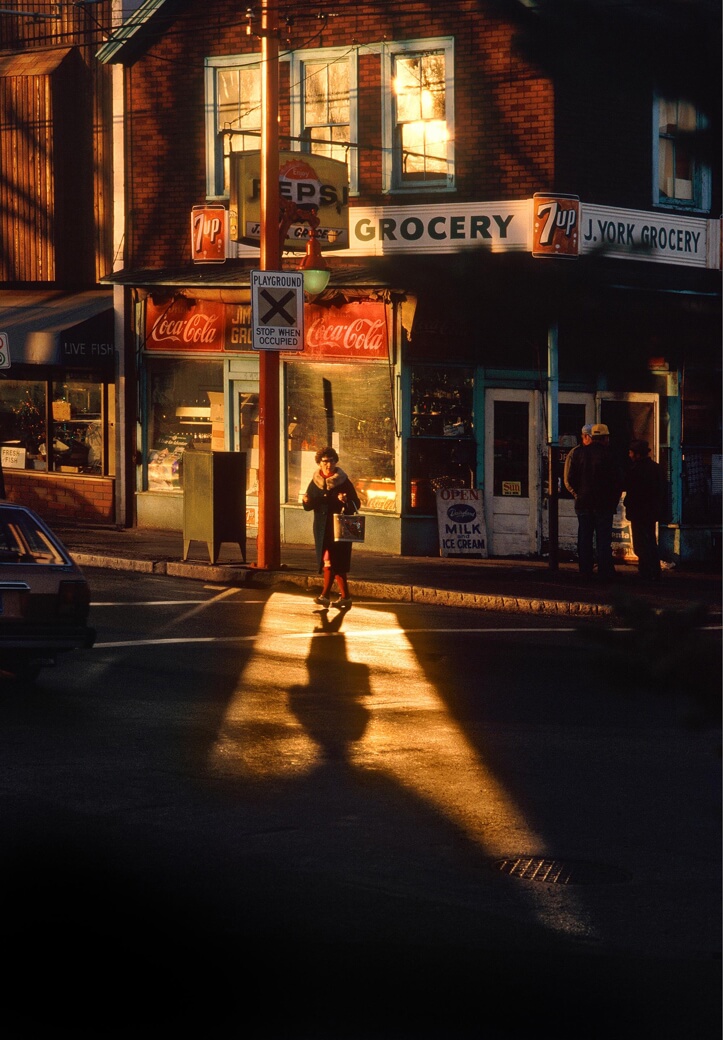
While Ernst Haas and Saul Leiter were active in New York and elsewhere, another photographer who worked largely although not exclusively in color made a record of daily life in Vancouver, British Columbia. Fred Herzog arrived there as a young man in May 1953 after leaving his war-torn native Germany. He found work on a cargo ship, explored British Columbia on his motorcycle when he was not at sea, and in 1957 began work a medical photographer at a hospital in Vancouver. In his free time, he wandered the city’s streets with his camera.[28]
Many of Herzog’s streetscapes burst with vivid color while others possess a more tempered pastel quality. I especially like his use of telephoto lenses to compress Vancouver’s rough and grungy nature which for the most part no longer exists.





More information:
Contemporary Street Photographers
Especially considering my love for film photography, it’s probably no surprise that I am rather partial toward the masters of the pre-digital age. Still, there are a number of more contemporary photographers whose work draws my attention.
Nils Jorgensen (1958- )
Nils Jorgensen has a wide breadth of command over the medium of photography. Even a cursory glance over his work reveals his ability to communicate the aura of a high-profile event or the humorous candor of a chance street encounter. All of his work is incredibly engrossing. In particular, his sequences influenced me to look for similar opportunities.
More information:
- nilsjorgensen.com.
- David Gibson, Street Photographer’s Manual, pp. 90-91.
Merel Schoneveld (1983- )
People’s expressions: in my own work, this is the most elusive thing of all. Yet whenever I do manage to capture that candid, unposed expressiveness in my images, I feel like I hit the jackpot.
Merel Schoneveld is either very lucky or extraordinarily talented, and I think she’s definitely the latter. No other modern street photographer captures the expressiveness of people in urban spaces better than Merel Schoneveld. She does this not only in overwhelming volume but also at the highest level.
More information:
- merelschoneveld.nl.
- David Gibson, Street Photographer’s Manual, pp. 78-79.
Melissa Breyer
Breyer excels with making candids of people that feature strikingly bold contrast mostly in black and white. She makes interesting use of shadows, reflections, blur, and depth of field to capture the expressiveness in people’s faces as they go about their day-to-day life. Her work is truly captivating.
More information:
- melissabreyer.com.
- David Gibson, Street Photographer’s Manual, pp. 124-125.
Craig Whitehead (1988- )
Whitehead’s photography demonstrates a masterful use of several techniques to abstractualize. His interesting use of obstructions in front of people’s faces, shadows, light, blur, and lots of irony all combine to form a truly distinct body of work.
More information:
- sixstreetunder.com.
- David Gibson, Street Photographer’s Manual, pp. 178-179.
David Gaberle (1989- )
Gaberle’s photography features interesting tonality with few people. There is a kind of a haunting, airy, and empty quality to his images that I find rather compelling.
More information:
- davidgaberle.com.
- David Gibson, Street Photographer’s Manual, pp. 150-151.
Alan Schaller (1989- )
In his series entitled Metropolis, Alan Schaller’s exploration of the theme of disconnection immediately struck a chord with me. In our largely urban and always online world, we are far too disconnected from each other. Considering his wider work, I love his use of light to cast his subject matter in high and striking contrast across all of his photography.
More information:
- alanschaller.com.
- Essay on My Modern Met by Jessica Stewart entitled “Street Photographer Captures the Solitude of Urban Life Through Light and Shadow.”
Notes
1 Mary Warner Marien, Photography: A Cultural History (New York: Harry N. Abrams, Inc., 2002), 347; William Johnson et. al., Photography from 1839 to Today (Koln: Taschen, 2000), 654.
2 “A Brief History of Street Photography,” Street Photography, May 21, 2017, https://streetphotography.com/a-brief-history-of-street-photography/, accessed May 2, 2025.
3 Mary Warner Marien, Photography: A Cultural History (New York: Harry N. Abrams, Inc., 2002), 292; William Johnson et. al., Photography from 1839 to Today (Koln: Taschen, 2000), 446; Museum Ludwig Cologne, 20th Century Photography (Koln: Taschen, 2012), 24, 26; Peter Stepan, Icons of Photography: The 20th Century (Munich: Prestel, 1999), 102, https://archive.org/details/IconsOfPhotographyThe20thCentury/page/n103/mode/1up, accessed December 17, 2024.
4 “André Kertész,” Wikipedia, n.d., https://en.wikipedia.org/wiki/Andr%C3%A9_Kert%C3%A9sz, accessed July 11, 2025; Museum Ludwig Cologne, 20th Century Photography (Koln: Taschen, 2012), 330-331; Mary Warner Marien, Photography: A Cultural History (New York: Harry N. Abrams, Inc., 2002), 261-262; William Johnson et. al., Photography from 1839 to Today (Koln: Taschen, 2000), 528; “André Kertész,” Getty Museum, https://www.getty.edu/art/collection/person/103KH9, accessed December 14, 2024.
5 Museum Ludwig Cologne, 20th Century Photography (Koln: Taschen, 2012), 80-82; Mary Warner Marien, Photography: A Cultural History (New York: Harry N. Abrams, Inc., 2002), 258, 261; William Johnson et. al., Photography from 1839 to Today (Koln: Taschen, 2000), 535.
6 “Humanism, Magnum, and the Family of Man,” Magnum Photos, n.d., https://www.magnumphotos.com/arts-culture/society-arts-culture/humanism-magnum-family-of-man-alona-pardo-david-seymour-edward-steichen-henri-cartier-bresson-moma-new-york/, accessed July 11, 2025; Craig Hull, “The Humanist Photography Movement: Capturing the Essence of Humanity,” 100ASA, n.d., https://100asa.com/blog/the-humanist-photography-movement-capturing-the-essence, accessed July 11, 2025; “Humanist photography,” Wikipedia, n.d., https://en.wikipedia.org/wiki/Humanist_photography, accessed July 11, 2025.
7 Mary Warner Marien, Photography: A Cultural History (New York: Harry N. Abrams, Inc., 2002), 262.
8 Clément Chéroux, Henri Carier-Bresson (London: Thames & Hudson, 2008), 90-91.
9 Museum Ludwig Cologne, 20th Century Photography (Koln: Taschen, 2012), 135-139; “Robert Doisneau,” Wikipedia, n.d., https://en.wikipedia.org/wiki/Robert_Doisneau, accessed May 2, 2025.
10 Jean-Claude Gautrand, Robert Doisneau (Koln: Taschen, 2003), 10.
11 Willy Ronis by Willy Ronis: The Master Photographer’s Unpublished Albums (Pais: Flammarion, 2018), 5-6.
12 Peter Stepan, Icons of Photography: The 20th Century (Munich: Prestel, 1999), 106, https://archive.org/details/IconsOfPhotographyThe20thCentury/page/n107/mode/1up, accessed December 17, 2024.
13 “Willy Ronis’ Most Famous Images, Told by Himself,” Jonas Cuénin, April 24, 2025, https://www.blind-magazine.com/stories/willy-ronis-most-famous-images-told-by-himself/, accessed May 12, 2025.
14 “Louis Stettner,” Wikipedia, n.d., https://en.wikipedia.org/wiki/Louis_Stettner, accessed July 11, 2025; Sally Martin Katz, “An Ode to Humanity: The Photographic Vision of Louis Stettner,” Louis Stettner (London: Thames & Hudson, 2024), 13-14, 25.
15 “Louis Stettner,” Wikipedia, n.d., https://en.wikipedia.org/wiki/Louis_Stettner, accessed July 11, 2025; Sally Martin Katz, “An Ode to Humanity: The Photographic Vision of Louis Stettner,” Louis Stettner (London: Thames & Hudson, 2024), 15.
16 “Louis Stettner,” Wikipedia, n.d., https://en.wikipedia.org/wiki/Louis_Stettner, accessed July 11, 2025; Sally Martin Katz, “An Ode to Humanity: The Photographic Vision of Louis Stettner,” Louis Stettner (London: Thames & Hudson, 2024), 15-17.
17 Sally Martin Katz, “An Ode to Humanity: The Photographic Vision of Louis Stettner,” Louis Stettner (London: Thames & Hudson, 2024), 23.
18 Sally Martin Katz, “An Ode to Humanity: The Photographic Vision of Louis Stettner,” Louis Stettner (London: Thames & Hudson, 2024), 18-23.
19 Museum Ludwig Cologne, 20th Century Photography (Koln: Taschen, 2012), 274; “Profile: Frank Horvat,” The Independent Photographer, n.d., https://independent-photo.com/news/frank-horvat/, accessed July 16, 2025; Frank Horvat, “The ‘40s,” horvatland.com, n.d., https://www.horvatland.com/WEB/en/THE40s/theme.htm, accessed September 12, 2025.
20 “Elliott Erwitt,” Wikipedia, n.d., https://en.wikipedia.org/wiki/Elliott_Erwitt, accessed July 16, 2025.
21 Mary Warner Marien, Photography: A Cultural History (New York: Harry N. Abrams, Inc., 2002), 284, 343-344.
22 Mary Warner Marien, Photography: A Cultural History (New York: Harry N. Abrams, Inc., 2002), 344.
23 William Johnson et. al., Photography from 1839 to Today (Koln: Taschen, 2000), 654; “Louis Faurer,” Wikipedia, n.d., https://en.wikipedia.org/wiki/Louis_Faurer, accessed July 16, 2025.
24 “A Brief History of Street Photography,” Street Photography, May 21, 2017, https://streetphotography.com/a-brief-history-of-street-photography, accessed May 2, 2025; Mary Warner Marien, Photography: A Cultural History (New York: Harry N. Abrams, Inc., 2002), 350; William Johnson et. al., Photography from 1839 to Today (Koln: Taschen, 2000), 660.
25 William Johnson et. al., Photography from 1839 to Today (Koln: Taschen, 2000), 658-659; Mary Warner Marien, Photography: A Cultural History (New York: Harry N. Abrams, Inc., 2002), 349-350.
26 “Ernst Haas,” Wikipedia, n.d., https://en.wikipedia.org/wiki/Ernst_Haas, accessed August 13, 2025.
27 “Saul Leiter,” Wikipedia, n.d., https://en.wikipedia.org/wiki/Saul_Leiter, accessed August 13, 2025.
28 David Campany, “Of Time and Place,” in Fred Herzog: Modern Color (Berlin: Hatje Cantz, 2016), 4-5.